
Cientistas clonam subespécie ameaçada de cavalo

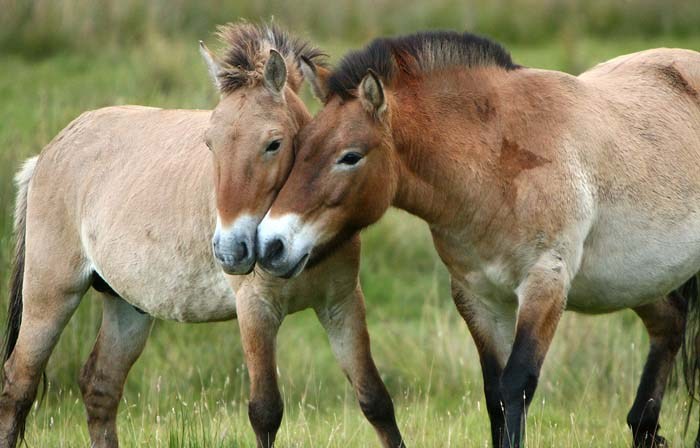
SURPRISE START TO BREEDING PROGRAMME FOR "ONLY TRUE WILD HORSE" 14 September 2012: There was a surprise start to a breeding programme for endangered Przewalski horses at the Highland Wildlife Park in Kincraig, Inverness-shire. A press call on Friday morning was intended to let photographers get pictures of Hero, a five-year-old stallion that has been introduced to resident females Sara and Ieda. But within minutes, after some nuzzling and playful behaviour, Hero attempted to mate with both females! Keepers at the Park are hoping that Hero's first foals will be born next August. The Przewalski is said to be "the only true wild horse left on the planet". Photos by Andrew Smith / NorthScotNews.com (07746769756) Press release from Highland Wildlife Park: Holding Out for a Hero in the Highlands He’s strong, he’s fast and he’s definitely a Hero! The waiting game is over for the Highland Wildlife Park’s resident female Przewalski’s horses (also known as Mongolian wild horses), as they welcomed a new stallion called Hero to the Park. This five year old stallion, Hero, arrived in the Highlands last month and after a 30 day quarantine period was introduced to the Park’s resident mares, Sara and Ieda, this week. The trio seem to be getting on extremely well together so far, but there was a bit of kicking and chasing to begin with, which was to be expected. Since moving in with his mares, keepers have already spotted mating behaviour between Hero and Sara. It is hoped that Hero’s first foals will be born next August – which would be fantastic as it would continue the Park’s successful history in breeding this Endangered species. Hero has also been sticking close to his new harem and the herd have been seen nibbling one another.  Part of grooming, nibbling also helps to strengthen the bonds amongst the herd as a whole. Przewalski’s wild horses – pronounced sheh-val-skee – were among the most threatened species in the world, and the horses are nam

Os cavalos-de-przewalski são uma subespécie de cavalo selvagem natural da Ásia. Assim como muitos outros animais, essas populações se encontram ameaçadas — na verdade, chegaram a ser extintas da natureza no início do século 20. Hoje existem 2 mil espécimes, descendentes de apenas 12 indivíduos salvos da extinção há mais de 100 anos . A sorte dos cavalos-de-przewalski é que, em 1980, cientistas preservaram células de alguns representantes da espécie e as mantiveram em criopreservação, técnica que congela células e tecidos, no Instituto para Pesquisa de Conservação do Zoológico de San Diego (SDZG), nos Estados Unidos. Essas linhagens contêm a diversidade genética perdida nas últimas gerações e necessária para salvar a espécie.

Foi graças a elas que os cientistas do SDZG conseguiram clonar um cavalo nascido em 1975 no Reino Unido, transferido para os EUA em 1978 e que viveu até 1998. Ele era chamado de Kuporovic por seus cuidadores. No último dia 6 de agosto, nasceu Kurt, o clone de Kuporovic e o primeiro da espécie. O nome é uma homenagem a Kurt Benirschke, que fundou o instituto de pesquisa do zoológico.
“Esse nascimento expande a oportunidade de resgate genético de espécies selvagens ameaçadas”, disse Ryan Phelan, diretor da Revive & Restor, empresa norte-americana especializada em estudos desse tipo, em comunicado.
De acordo com Shawn Walker, cientista-chefe da ViaGen Equine, empresa norte-americana que estuda a reprodução de equinos, Kurt é saudável e fértil. “Ele está dando cabeçadas e chutando, e demanda leite de sua mãe substituta”. Quando crescer mais um pouco, o filhote será levado para o Parque Safari do zoológico, a fim de conviver com outros animais da sua espécie e, quem sabe, produzir descendentes.

Os comentários estão fechados.